Repowering Technical and Financial Toolbox in 2026
What is the meaning of repowering?
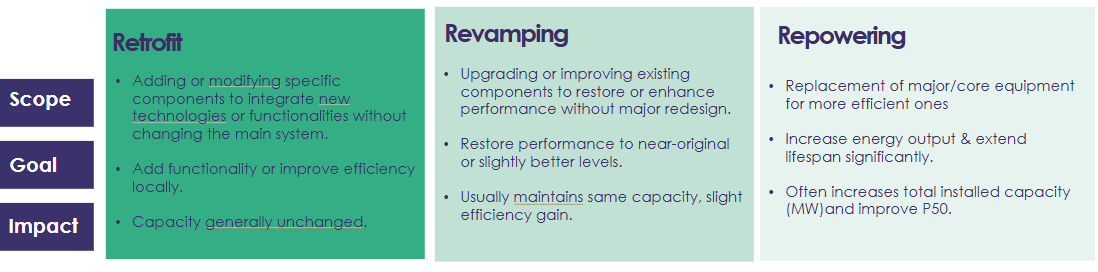
Repowering is the process of upgrading or replacing major components of anexisting system to improve its performance, efficiency, capacity, or lifespan, withoutcompletely rebuilding the system from scratch.
Beware of similarities
Key differences between :
Retrofit
- Adding or modifying specificcomponents to integrate newtechnologies or functionalities withoutchanging the main system.
- Add functionality or improve efficiencylocally.
- Capacity generally unchanged.
Revamping
- Upgrading or improving existingcomponents to restore or enhanceperformance without major redesign.
- Restore performance to near-originalor slightly better levels.
- Usually maintains same capacity, slightefficiency gain.
Revamping
- Replacement of major/core equipmentfor more efficient ones
- Increase energy output & extendlifespan significantly.
- Often increases total installed capacity(MW)and improve P50.
Overall Context
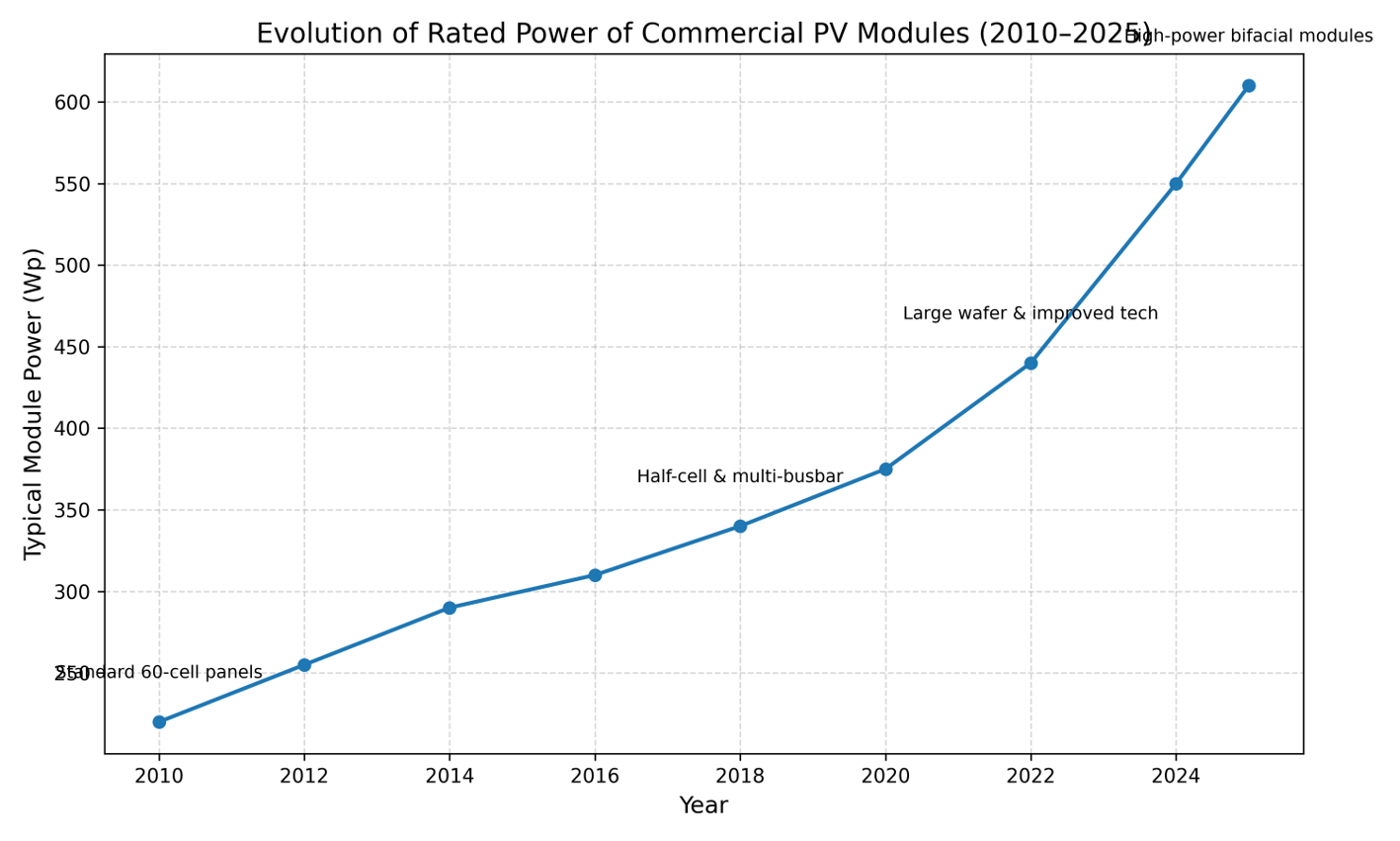
The current context of the solar industry is characterized by an aging PV fleet, with many installations now reaching 15–20 years of operation. A large share of these solar assets was built with low-power modules, typically below 300 Wp, and is now affected by aging and degradation that impact overall plant performance. For stakeholders involved in solar asset management and solar PV management, these aging components increasingly influence energy production and operational reliability.
At the same time, the market has evolved significantly. Solar technology continues to improve, with higher-efficiency modules now available at lower cost than when many plants were originally commissioned. In parallel, the industry faces stricter requirements regarding performance, availability, and grid compliance, making the modernization of existing PV plants an important consideration for owners and operators. In this environment, a renewable energy consultant or solar technical advisor may evaluate whether upgrading key components can help existing assets meet current market standards.
Repowering represents an opportunity to unlock the untapped potential of existing PV assets by increasing performance and improving economic returns without developing new sites. Rather than building new projects, plant owners can enhance the value of their current installations through targeted upgrades assessed through technical due diligence and supported by experienced renewable energy technical advisors.
Why Repower Modules of a PV Plant? – Key Advantages
Repowering PV modules can increase energy production by integrating higher-performance technologies into existing plants. It can also increase installed capacity, extend the lifecycle of the plant, and improve overall reliability and availability. By enhancing plant performance and reducing operational constraints, repowering can ultimately contribute to improved profitability for asset owners and investors managing long-term solar portfolios.
When Is PV Module Repowering Relevant?
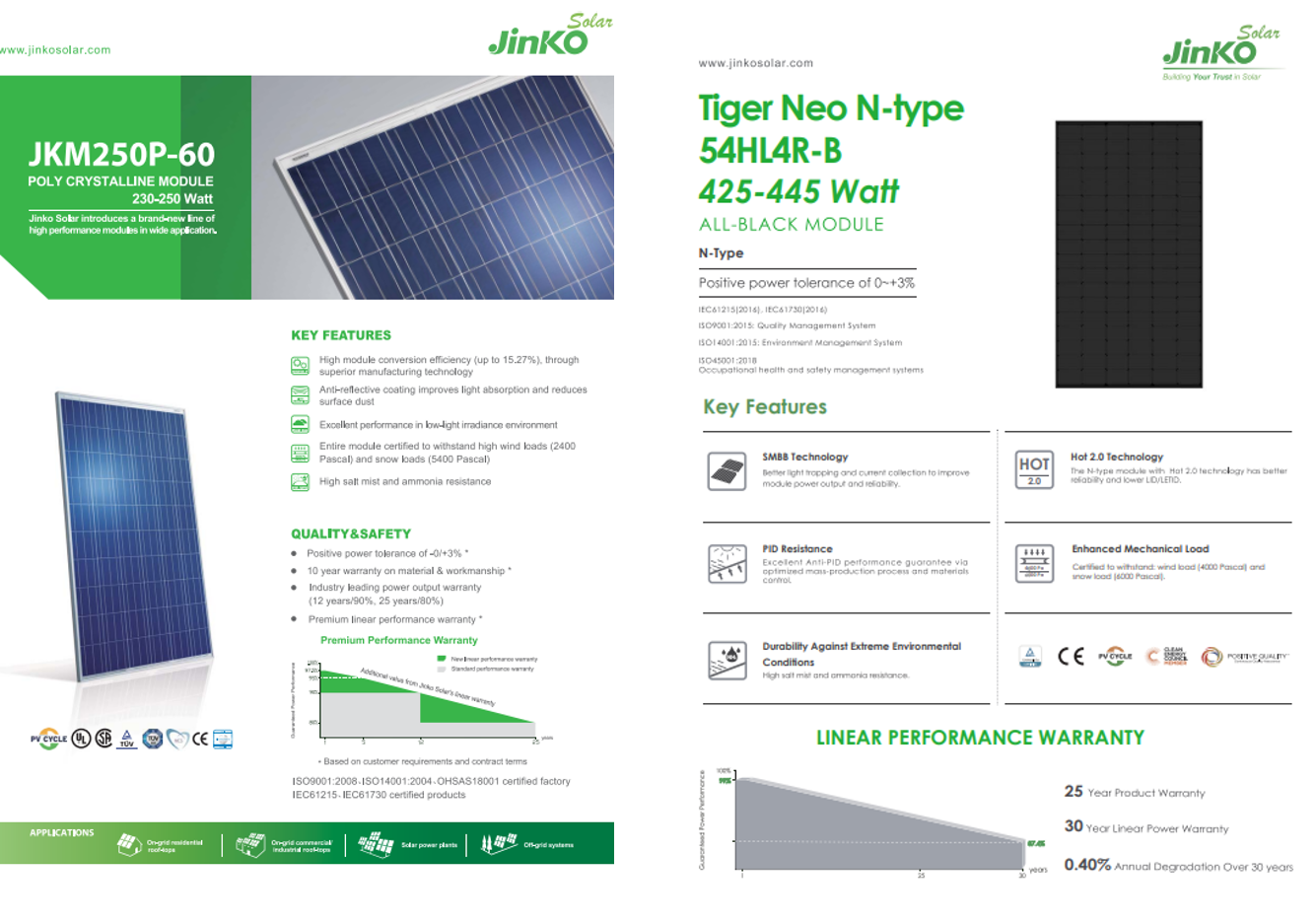
Repowering becomes particularly relevant when PV plants operate with outdated module technology. Many early projects were developed with low-power modules, typically below 250–300 Wp, which now show lower efficiency compared with current industry standards and may have limited compatibility with modern system designs.
Operational issues may also trigger repowering considerations. In some plants, spare parts are no longer available, module degradation is higher than initially forecast, and failure rates and downtime increase over time. In these cases, a structured evaluation—often conducted through solar due diligence or a technical audit—can determine whether module replacement provides a viable solution.
Opportunity to Increase Value Without New Sites
Repowering may also represent an opportunity to increase value without developing new sites. In many cases, land availability, grid connection, and permits are already in place, although amendments or additional studies may sometimes be required. Compared with greenfield development, repowering modules can be faster and less capital-intensive, although it should not be considered a guaranteed solution. In certain configurations, repowering may also allow capacity increases within the same project footprint.
Technical Constraints of Module Repowering
Electrical limitations are among the main technical constraints associated with module repowering. These constraints include compatibility with existing inverters, maximum DC voltage, maximum DC current per string, MPPT operating voltage ranges, and the configuration of existing string cables. In addition, the DC/AC ratio may be limited if DC capacity increases significantly.
These electrical constraints can introduce operational risks such as inverter clipping losses, production curtailment, or inverter overheating. A detailed technical assessment by a solar technical advisor or renewable energy technical advisor is therefore essential to evaluate the feasibility of repowering scenarios.
Structural limitations must also be considered. New modules may have higher weight, different dimensions, or modified wind and snow load characteristics. These differences can create risks such as increased mechanical stress, accelerated structural fatigue, and reduced long-term reliability of mounting systems.
In some situations, these constraints extend beyond simple module replacement. When mitigation measures are not feasible, repowering may require a broader upgrade of the plant, including the replacement of inverters, transformers, or support structures.
Grid and Regulatory Constraints
Grid and regulatory considerations can significantly affect repowering projects. Grid reinforcement requirements, the need for new permits or authorizations, and evolving regulatory frameworks can introduce delays, increase CAPEX, and add administrative complexity. These aspects are often reviewed during technical due diligence processes to ensure project feasibility and regulatory compliance.
Site Layout Constraints
Site layout may also limit repowering options. Many existing PV plants were designed with fixed spacing and orientation parameters that may not be optimal for newer modules. Shading conditions may also become less suitable if module height or tilt changes.
These constraints can lead to increased shading losses and higher mismatch losses, which may offset part of the expected performance gains. As a result, grid, regulatory, and layout constraints may require significant redesign, additional permitting, or infrastructure upgrades before repowering can proceed.
Key Economic Drivers
Several economic factors can drive the decision to repower a PV plant. Increasing the annual energy yield through higher module efficiency and improved performance ratios can directly increase project revenues.
Repowering can also extend the asset lifetime, typically by an additional 10 to 30 years. This extension effectively resets the degradation curve and improves long-term cash flow visibility for investors and asset owners managing long-term solar assets.
Another key factor is CAPEX optimization. Repowering generally requires lower investment than developing greenfield projects because existing land, grid connections, and infrastructure can be reused.
Operational expenditure can also be optimized through repowering. Lower failure rates, reduced corrective maintenance costs, and improved warranty coverage can enhance operational performance within a solar asset management strategy.
Finally, repowering aligns with ESG objectives by reducing the environmental footprint of solar projects and maximizing the use of existing infrastructure rather than developing new sites.
How Greensolver Supports PV Plant Owners Through the Repowering Process
Greensolver supports PV plant owners throughout the repowering process using a structured technical and economic approach. The process typically begins with a performance assessment and the evaluation of repowering yield potential. This includes analyzing historical plant performance—such as energy production, performance ratio, and availability—and reassessing expected future production without repowering by considering module degradation rates, plant unavailability, and long-term irradiation trends.
The next step consists of identifying general constraints, including electrical and regulatory limitations. This stage distinguishes between constraints that can be mitigated and those that represent hard limitations. Structural and layout constraints are also identified, although detailed assessments may require specialized geotechnical and layout engineering expertise beyond standard technical due diligence.
Electrical design and system compatibility are then reviewed. This includes analyzing the existing as-built electrical design, assessing compatibility with modern PV modules, and simulating repowering scenarios using PVSyst with existing or new inverters.
Regulatory aspects are also reviewed, including initial building permits, grid connection agreements, and power purchase agreements.
Greensolver can also provide support during procurement, installation, and financing phases. This includes assistance with equipment selection, supplier bankability review, evaluation of EPC and procurement contracts, and techno-economic assessment covering CAPEX, production uplift, and OPEX reduction.
Finally, operational practices are reviewed, including existing O&M contracts. Recommendations may include adapting preventive and corrective maintenance scopes, optimizing spare parts strategies, integrating new warranties and equipment guarantees, verifying contract duration and extension options, and reviewing soiling monitoring and cleaning practices.
Conclusion
PV module repowering is primarily a value optimization exercise rather than a guaranteed upgrade. Its economic value lies in upgrading existing assets instead of developing entirely new ones. However, the benefits depend on technical, regulatory, and operational constraints that must be carefully assessed.
Through a structured technical and economic methodology, Greensolver supports PV module repowering assessments to determine project relevance, quantify potential value, and manage the constraints associated with upgrading existing solar assets.
Written by Paula Ortega and Imane Alil