Case Study : Estimated Yield Assessment for Complex AgriPV Systems
Context
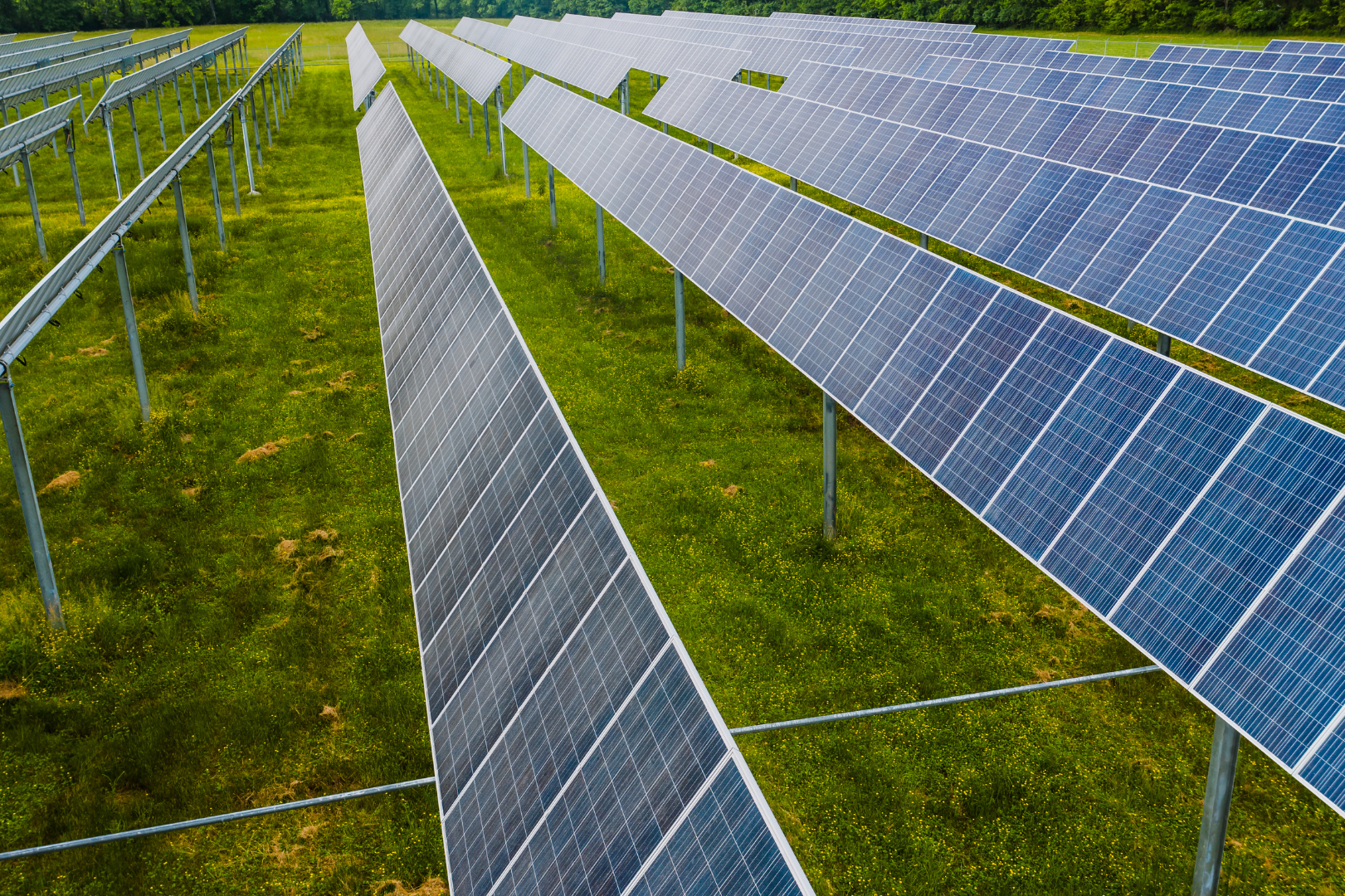
We conducted several audits of AgriPV projects under development, focusing on the unique technical aspects of agricultural projects and their integration with innovative PV tracker systems. These trackers are designed to adjust dynamically based on factors such as crop type, farming activities, and seasonal variations.
Calculation of the different heights and their impact on the tracking system
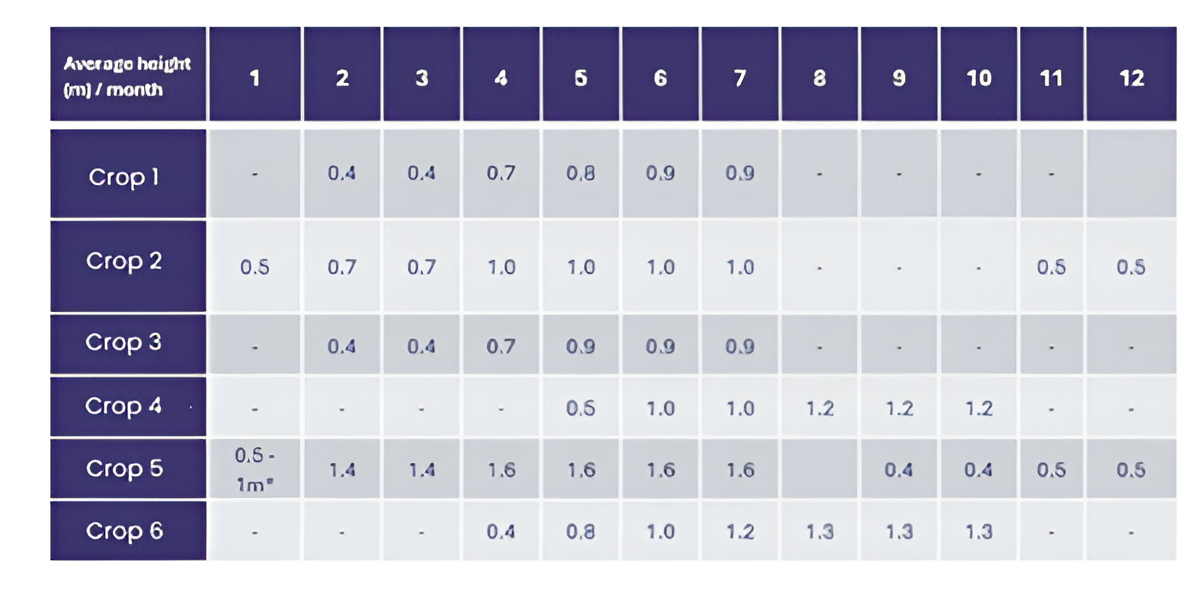
To refine the tracking system’s operation, we analyzed the characteristics of various crops, identifying their height variations throughout the year and across different seasons. We based our analysis on an agronomic report to ensure proper consideration of the crop’s growth from an expert perspective.
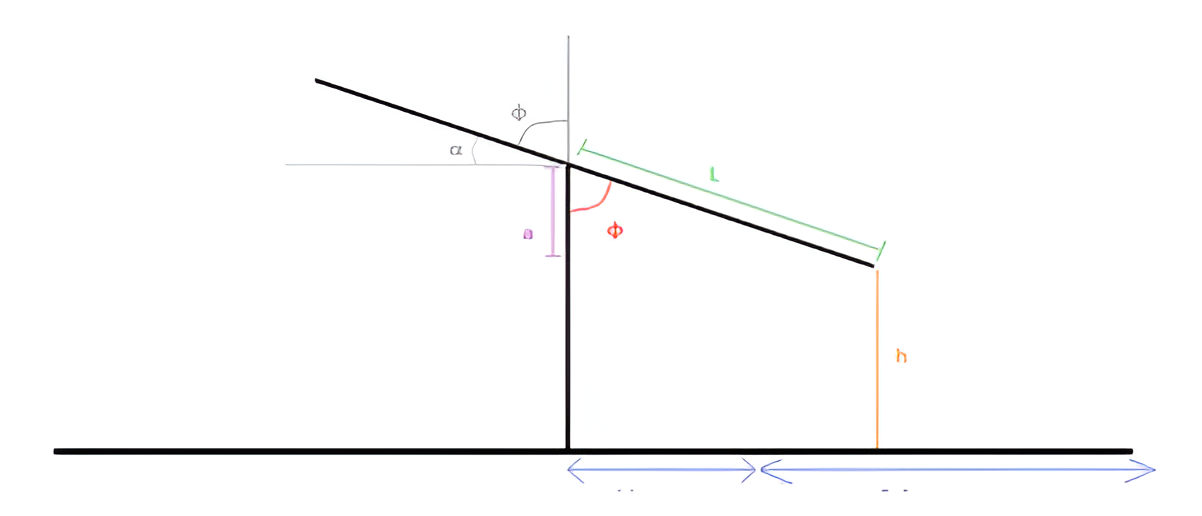
This information was mostly important to track the minimum height for the PV tables in order to avoid contact and degradation to the crop (including a margin). Thanks to the height and geometrical calculation, this allowed us to determine the “anti-tracking” period and establish precise monthly operating modes for the trackers. We then modeled these simulations to fully integrate the plant-specific operating conditions into the system’s functionality.
As explained before, please find a simplification of PV table with the different angles and length to consider in order to properly assess the EYA that can be calculated from the height of the crop.
We base our findings on studies conducted by agronomists to correspond to plant and crop growth, with the following list of plants that can be modeled as examples considered in this case study.
- Peas
- Winter wheat
- Spring barley
- Grass fodder
- Winter rapeseed
- Soybeans
For instance, we can find below a table explaining the difference of growth from different crops within a given year. Each crop has been anonmysed but during a complete EYA mission, the information will be available to review from the client.
Final StudyOutcome
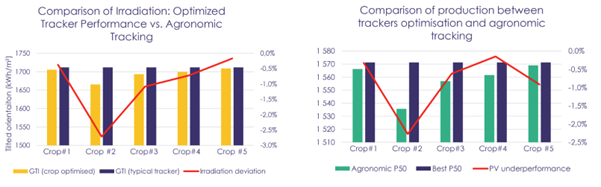
We calculated the P50 yield of the AgriPVplant by incorporating irradiation levels and tracker orientation. This ensures that future project yields can be accurately validated while simultaneously optimizing plant growth and agricultural productivity.
Greensolver’s track records Agri PV.
More than 70% of the PV projects we work on can be considered Agri-PV, with varying degrees of complexity. By extrapolation, we estimate that we have audited more than 10 GW of Agri-PVprojects(1000+ projects) out of a total of35 GW of PV due diligence.
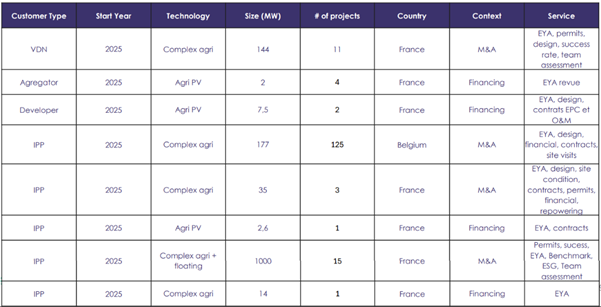
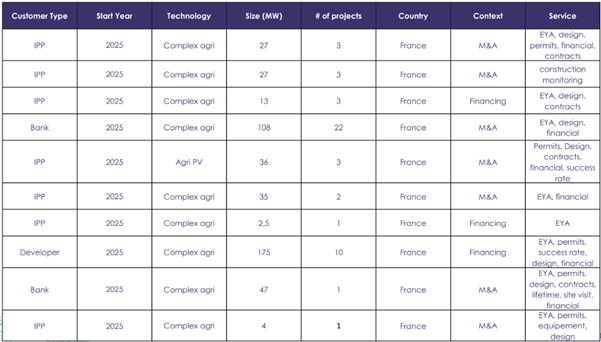
Total in 2025: 211 projects(2GW) witha majorityof complex agri PV projects. Below is an extract of our2025 Agri-PV projects
Written by Ianis Bouaddi
Greensolver’s key solar references.
Out of the 55 GW of technical due diligence we have conducted, here is a selection of solar due diligence projects where we acted as technical auditors :
- For the lenders BPI and Crédit Agricole for the €200 million financing of Technique Solaire : Technique Solaire lève 200 millions d’euros auprès de Bpifrance et Crédit agricole
- For the investors Mirova and BNP Paribas for the €200 million entering into capital of Arkolia : Une nouvelle étape pour Arkolia qui s’associe à Mirova et BNP Paribas Asset Management dans le cadre d’une transaction de plus de 200 M€
- For Arjun Infrastructure Partner investment fund for Amarenco’s €300 million fundraising: Amarenco lève 300 millions d’euros pour soutenir sa croissance – Amarenco
- For the investment fund Pioneer Point Partner for the acquisition of a majority stake in PerPetum : Le développeur PerPetum poursuit sa croissance aux côtés du fonds d’investissement Pioneer – pv magazine France