Mar. 10, 2026
Review of CATL’s “Zero Degradation” Battery Energy Storage System (BESS)
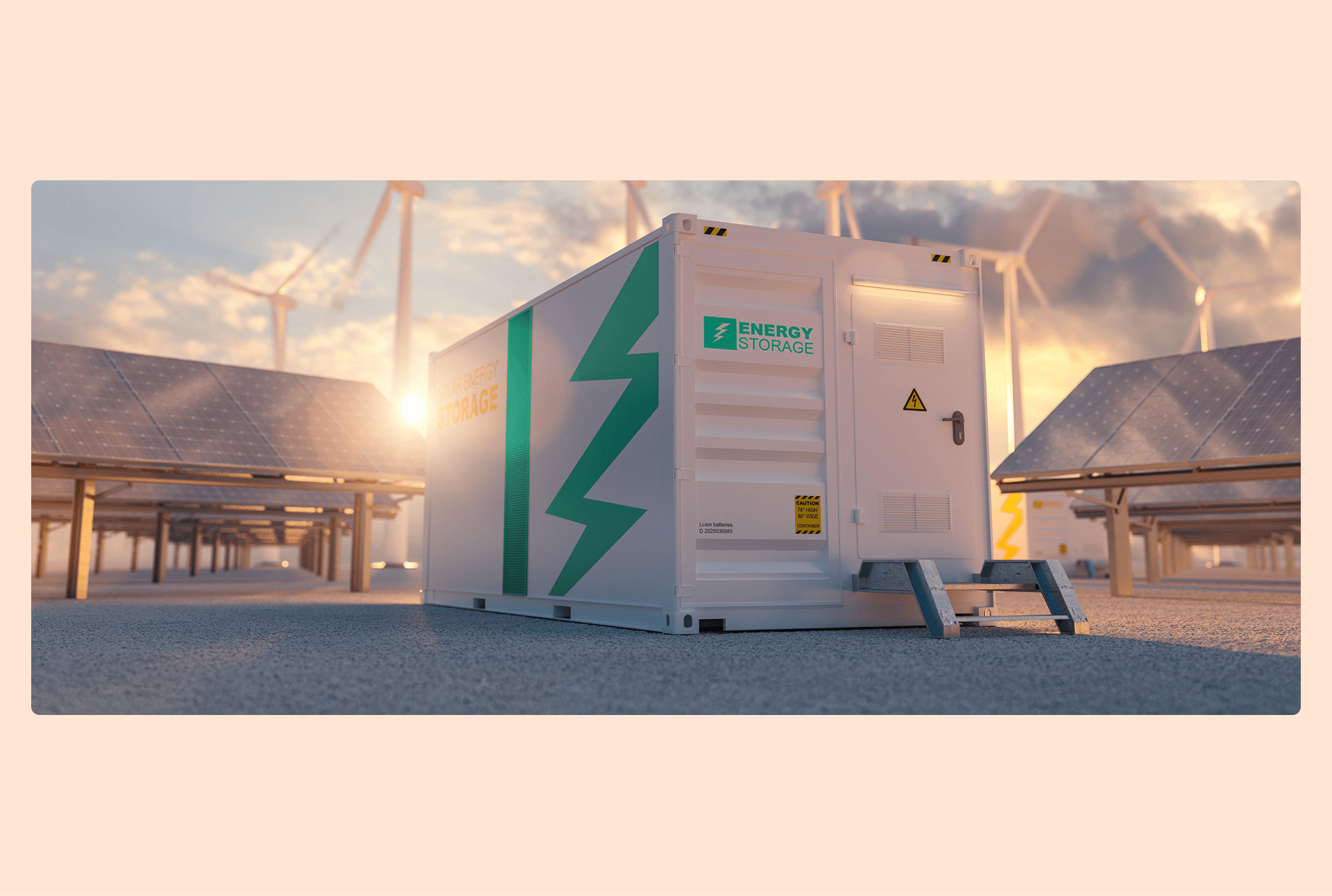
Contemporary Amperex Technology Co., Limited (CATL), a leading battery and cell manufacturer based in China, has recently unveiled its new TENER Battery Energy Storage System (BESS). CATL’s announcement of its new BESS has attracted the industry’s interest as its new system offers high energy density, and is claimed to exhibit zero degradation for up to five years of its initial operation.
Reported to have been deployed in one of CATL’s projects near its headquarters, the TENER BESS has undergone rigorous testing for over 3 years, bolstering its readiness for mass production and commercialization. Compared to previous containerised BESS, the TENER system boasts an impressive capacity of over 6MWh, offering up to a 30% increase in energy density, enabling improved utilisation of land and infrastructures, maximising a site’s potential.
With regards to the TENER’s claimed zero degradation, it is a market first and is claimed to have been made possible through the use of new and innovative technologies which utilise “Biomimetic” SEI and “Self-Assembling” electrolyte. With such technologies, CATL claimed to have mitigated the effects of degradation, increasing the reliability of TENER’s capacity.
By providing a large, stable and long-lasting BESS to store energy, the TENER system could enhance grid stability and support the increased use of intermittent renewable sources. However, while CATL’s claims are promising, it’s important to note that the claims and the system’s performance need to be validated.
To thoroughly evaluate CATL’s claims and the potential impact of their new TENER system, this review will proceed as follows. First, we will examine the common degradation mechanisms in traditional lithium-ion batteries to establish a baseline understanding. Then, we will analyze CATL’s specific claims regarding their Biomimetic SEI and Self-assembling electrolyte technologies, considering their potential effectiveness in mitigating degradation.
With this framework in mind, let’s examine the common degradation mechanisms in lithium-ion batteries. Traditional lithium-ion batteries experience capacity fade over time due to various factors:
The concept of Biomimetic SEI has been explored in academic literature and was found to enhance ionic conductivity, mitigating lithium plating, and hence decelerating the battery’s capacity degradation. Although promising, it should be noted that technical challenges persist in Biomimetic SEI’s application and its effectiveness on industrial batteries is yet to be demonstrated.
Regarding Self-assembling electrolytes, research and works in its application are currently limited. Therefore, further data from CATL is required to fully validate its capabilities and effect on the cell’s performance. However, even if such technology can display self-healing capabilities, naturally occurring ageing mechanisms that is observed at every cycle of the batteries will limit the Self-assembling electrolyte’s effectiveness, making true zero BESS challenging and highly unlikely.
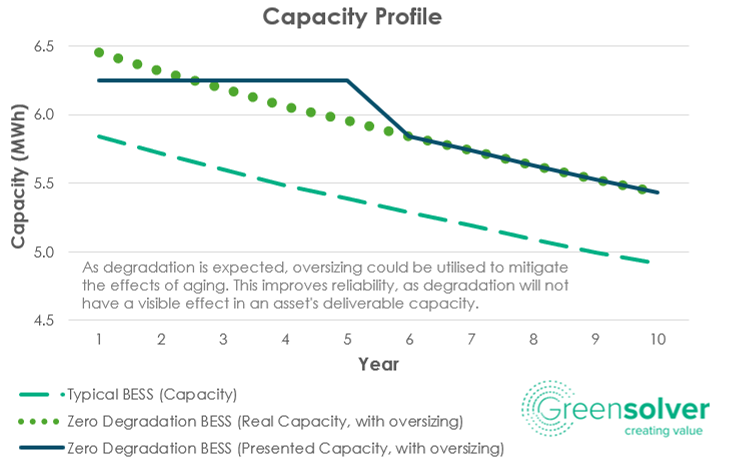
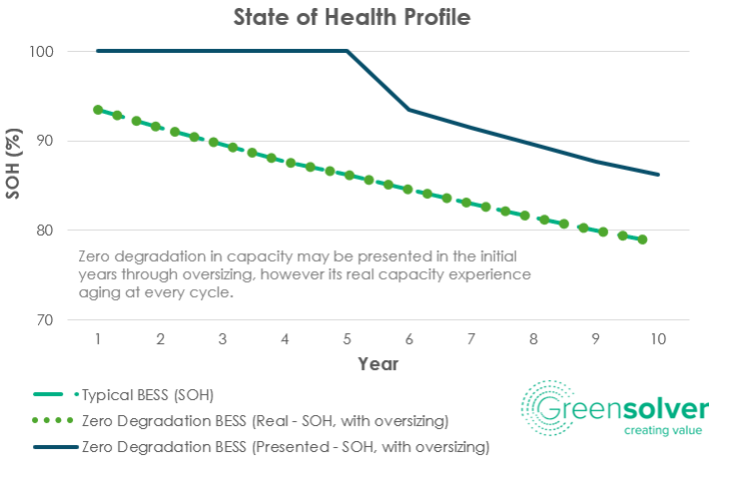
Therefore, given the above challenges, TENER’s initial zero degradation characteristics may have been achieved by utilising other strategies, such as oversizing to compensate for the natural degradation of the cells. By employing this approach and adhering to an operating parameter of one cycle per day, a capacity and state of health profile as shown below may be achieved.
Conclusion
CATL’s claims represent significant progress in reducing degradation. The concepts behind Biomimetic SEI and Self-assembling electrolytes hold promise, however, achieving complete degradation requires further data for validation. While achieving zero degradation within five years seems unlikely through electrochemical solutions, oversizing may have been utilized and could explain the claimed zero degradation profile of CATL’s TENER system.
Written by Niko Taplacido, Energy Storage Consultant


Suivre les nouveautés
Contactez nous