Compliance Monitoring at GW Scale: Why the Best Large Operators Get Better, Not Busier
Portfolio operators managing multi-GW fleets face a structural paradox: scale should improve quality, but without the right systems, it amplifies inconsistency instead. What separates the best large-scale operators isn’t headcount or experience alone. It’s whether institutional knowledge compounds or evaporates.
The manual ceiling
Traditional technical asset management relies heavily on manual processes: spreadsheets, inbox tracking, and asset-by-asset reviews. This creates a bottleneck where asset manager time becomes the limiting factor. Compliance obligations, inspection deadlines, and maintenance deviations are often tracked inconsistently. Quality depends on who’s looking, not on what the system catches.
As portfolios scale, this approach introduces a ceiling on quality – and a trust problem. A single missed statutory obligation doesn’t just affect one asset. It raises a harder question: if this slipped through, what else has? At scale, one failure in a large wind or solar fleet can undermine confidence in the entire compliance picture. Even experienced asset managers cannot compensate for systems that do not scale, because trust, once lost, is not rebuilt by expertise alone.
Structured data extraction as the prerequisite
The volume of repetitive documents compounds the problem. Statutory inspection reports, maintenance records, and compliance certificates follow predictable formats, but reading through hundreds of them to extract the same data points is time-consuming. The deeper problem is trust. Manually extracted data ages badly: as contracts pile up, no one is certain which version reflects the current state, and confidence decays even when the original work was done correctly. Automations invert this. They extract continuously, so the structured record always reflects the latest document, not a snapshot from whenever someone last had time to read it. At portfolio scale, it’s simply not realistic to review every document thoroughly. The practical result: asset managers default to spot checks, accepting that some items will be missed. That’s not a failure of diligence. It’s a rational response to an unreasonable workload, and spot checks are incomplete by definition.
This is where the division of labour matters. Extracting structured data from repetitive documents is exactly the kind of task machines do better than humans: faster, consistently, without fatigue. When automated extraction surfaces the issues that require attention, engineers can focus entirely on judgment and resolution, not retrieval. The role of the asset manager shouldn’t be to read the document. It should be to act on what the document contains.
Statutory inspection management in practice
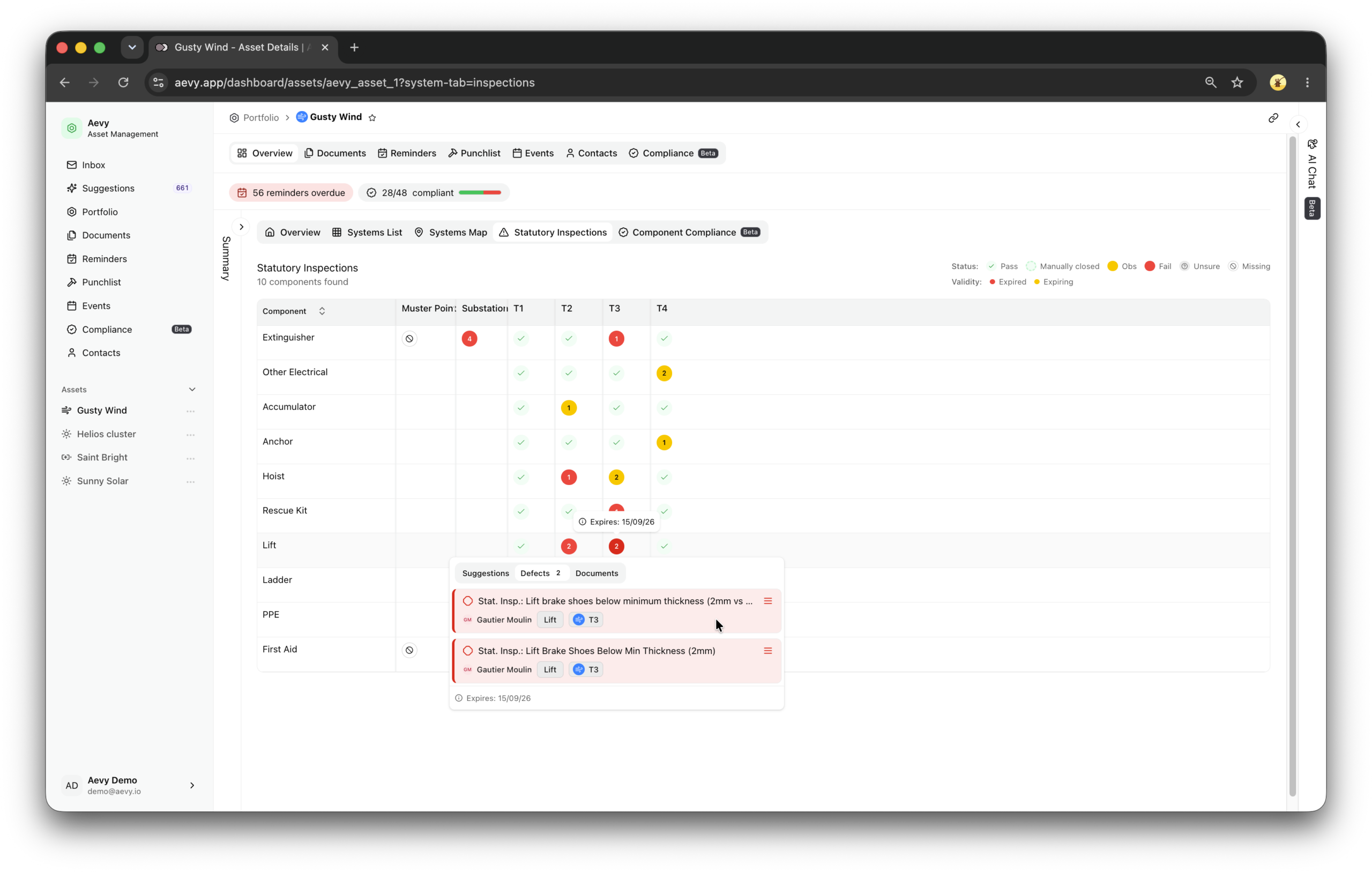
For Greensolver, managing statutory inspections across a 7 GW fleet means dealing with hundreds of inspection reports per year – each following a similar structure, each requiring the same data points to be extracted and checked against regulatory deadlines. Previously, asset managers had to open each report, read through it, and manually log the relevant findings. At this volume, full coverage was technically feasible – but doing it consistently, without error, would require time no team could justify spending on document processing alone. Aevy now processes those reports automatically: compliance status is flagged, upcoming deadlines are tracked, and any deviation from statutory requirements surfaces immediately. Greensolver’s asset managers don’t start from the document anymore. They start from a proposed course of action. Aevy doesn’t just surface the deviation, it makes a first assessment, pulls in the relevant contract clauses, historical defects, and deadlines, and presents a decision basis. The engineer validates and decides rather than assembling context from scratch.
But the real shift happens at portfolio level. Because every report is processed the same way, the extracted data is consistent and queryable across the entire fleet. We can now compare defect rates by turbine model across 50+ wind farms, benchmark inspection outcomes by region or contractor, and spot patterns that no single-asset review would surface. That’s not a reporting improvement. It’s a fundamentally different kind of analysis, one that only becomes possible when extraction is structured and consistent at scale.
Contractual and regulatory compliance at scale
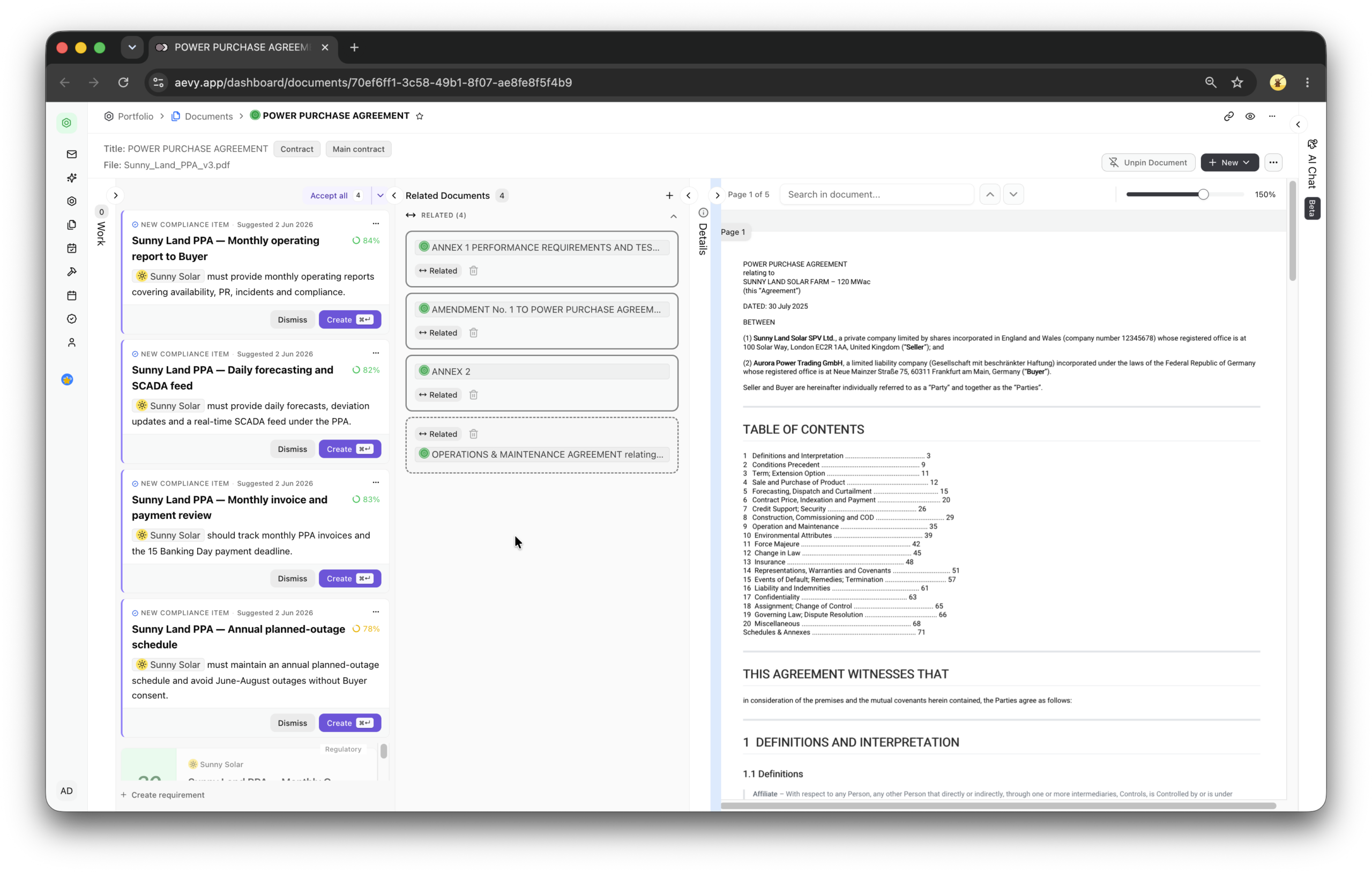
Statutory inspections are only one layer. A large portfolio also carries contractual obligations – O&M agreements, grid connection conditions, insurance covenants, environmental permits. Each with its own cadence, its own notice periods, and often its own owner within the team. Maintaining that picture manually across dozens of assets is not realistic.
The mechanism that makes this tractable is structured obligation tracking: each contractual requirement is extracted from the source document, assigned a timeline, and monitored continuously. The system doesn’t just flag a missed deadline. It encodes best practice into the workflow: each obligation carries the lead time it actually requires, and reminders fire when action should start, not once it’s already late. As the portfolio grows, that best practice sharpens, every contract refines the playbook the next one inherits.
Take an O&M contract with a 12-month termination notice clause. On the surface, the deadline is 12 months before expiry. In practice, the team needs 6-12 months before that to assess contractor performance, run a competitive process if needed, and make a considered decision. That means the effective action window opens 18-24 months before contract end. Without a system tracking that chain of events, the termination notice tends to be the first reminder anyone sees – by which point the options have narrowed significantly. With structured obligation tracking, the team receives a first alert when strategic review should start, a second when the decision needs to be made, and a final one when the notice window opens. The obligation is visible at the right moments, not just the last one.
Scale as a compounding advantage
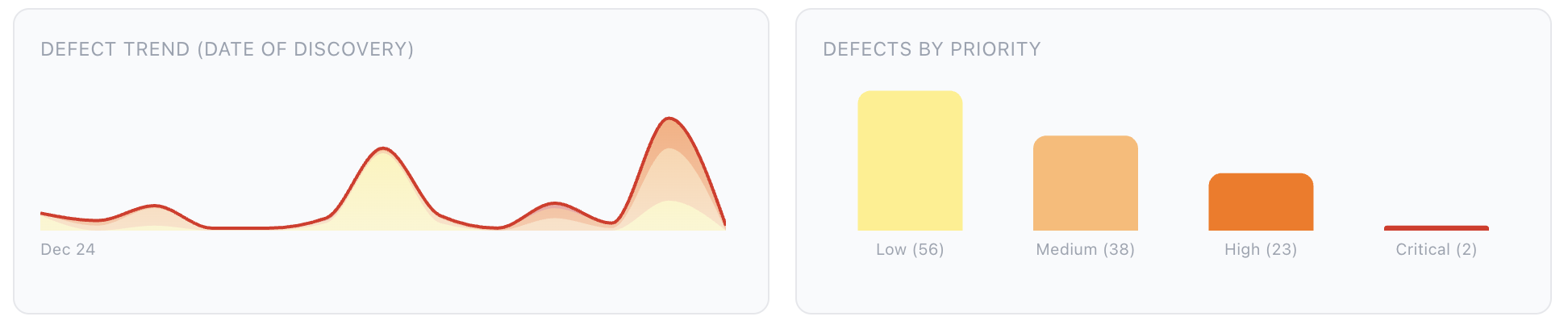
When structured systems are in place, scale becomes an operational advantage rather than a burden. Every additional asset onboarded contributes to a growing pattern library of defects, compliance edge cases, and resolution paths. And that library is cross-referenced, not siloed. We have identified, for instance, that specific gearbox defect patterns appear disproportionately in assets commissioned within certain year ranges, and that compliance gaps cluster around particular regulatory regimes. Those are conclusions you can only reach when structured data spans thousands of assets. It’s the difference between knowing “this turbine has a problem” and knowing “this problem is systemic across 15% of our portfolio.”
Institutional knowledge shifts from individual engineers to the platform itself, removing single points of failure. Lifecycle data is preserved over decades – expertise is not lost when team members leave.

Conclusion
The underlying pattern is consistent: scale without structure amplifies inconsistency, while scale with structured systems compounds quality over time. The next stage of evolution for asset management organisations is increasingly predictive – using portfolio-wide patterns to anticipate compliance exposure before it materialises rather than reacting after the fact.
What this looks like in practice
- Statutory inspection obligation management: reports parsed automatically, compliance status flagged, deadlines tracked across the full portfolio.
- Maintenance supervision: deviations flagged against contractual requirements without manual document review.
- Portfolio compliance overview: a continuously updated picture of where exposure exists, with reminders calibrated to the actual lead time each obligation requires – so teams act at the right moment, not the last one.
Each of these is live across the Greensolver fleet today.
Written by Benoît Chambon, Director Asset Management, Greensolver